
Flat Rate Fee Mike Sanders – BAW 212 | Corrosion Protection


€3,690.00
Prices incl. VAT; no shipping possible!
Please make an appointment with us
Description
Premium Long-Term Underbody and Cavity Corrosion Protection with Mike Sanders and TimeMAX for BAW 212
Long-lasting corrosion protection for your BAW 212: Using Mike Sanders Corrosion Protection Grease, TimeMAX underbody protection and supplementary Normfest Protector Wax, our workshop team draws on 30 years of experience to protect the corrosion-prone areas of your off-road vehicle – both inside and out. At our specialist 4x4 workshop in Berg bei Neumarkt, Bavaria, between Nuremberg and Regensburg, we offer professional underbody and cavity corrosion protection for the BAW 212.
Protect your BAW 212 from the outset. This helps prevent corrosion affecting the ladder chassis, underbody and vulnerable bodywork, avoid expensive repairs later and preserve your vehicle's structural integrity over the long term.
The following services are included in the complete package:
- Comprehensive corrosion protection: Treatment of the ladder chassis inside and out, underbody, wheel arches, axles, doors, tailgate and bonnet.
- Professional preparation: Removal of relevant covers and trim panels to gain access to hard-to-reach areas.
- Extensive protective masking: Careful masking of bodywork, painted surfaces, windows, brakes and other components that must not be treated.
- Mike Sanders cavity protection: Hot-spray application using specialist cavity probes for long-lasting, creeping corrosion protection.
- TimeMAX underbody protection: High-quality, durable coating for the underbody surfaces to be treated.
- Normfest Protector Wax: Supplementary corrosion protection in selected areas.
- Endoscopic inspection: Visual inspection of accessible cavities before and after treatment.
- Reassembly and cleaning: Reinstallation of removed components and final cleaning.
A detailed explanation of each stage of the treatment can be found below.
Your benefits – and what they mean for your BAW 212
- Corrosion prevention from the outset: Early treatment protects accessible metal surfaces before heavy contamination or rust damage develops.
- Protection from within: Protects areas inside the ladder chassis and bodywork where moisture can accumulate.
- Long-lasting creeping action: Mike Sanders Corrosion Protection Grease remains flexible and continues to spread into narrow gaps and seams when temperatures rise.
- Durable underbody protection: Protects treated surfaces against moisture, dirt, road salt and typical off-road stresses.
- Three premium branded products: Mike Sanders, TimeMAX and supplementary Normfest are used according to their individual material properties.
- Professional application: Disassembly, careful masking, specialist cavity probes and endoscopic inspections enable thorough treatment.
- Long-term preservation: Preventative corrosion protection helps avoid future rust damage and expensive repairs.
Our extensive experience in dealing with corrosion
We have been servicing and repairing off-road vehicles for 30 years and know from first-hand workshop experience what rust damage can do to chassis, axles, underbody components and bodywork. Our experience demonstrates the importance of early corrosion protection, especially for vehicles regularly driven off-road or during winter.
The BAW 212 combines traditional off-road construction with modern technology. Its robust ladder chassis and suspension components designed for demanding terrain are nevertheless exposed to moisture, dirt, road spray and road salt.
That is why we focus on preventative protection before significant corrosion damage develops. Early treatment is generally much easier than removing rust and repairing components that have already been damaged.
Comprehensive corrosion protection – protecting all relevant components
Long-term corrosion protection begins well beyond the visible underside of the vehicle. Internal chassis sections and body cavities deserve particular attention.
We treat the ladder chassis inside and out, the underbody, wheel arches, axles and corrosion-prone areas of the doors, tailgate and bonnet.
Moisture and dirt can accumulate inside cavities, around panel joints and in hard-to-reach areas. These areas are particularly exposed after driving along wet tracks, through mud or on salted roads during winter.
Comprehensive treatment specifically protects vulnerable metal surfaces and supplements the existing corrosion protection of your BAW 212.
Disassembly – accessing concealed areas
Effective corrosion protection must also reach areas that cannot be seen directly from outside.
We therefore remove relevant covers and trim panels before treatment. This provides access to important application points and otherwise difficult-to-reach areas.
It allows us to apply protective materials precisely and introduce them into internal cavities instead of treating only visible surfaces.
Protective masking – precise application without unwanted overspray
Corrosion protection belongs on the intended surfaces – not on paintwork, windows or brakes.
Before treatment, the vehicle is carefully covered and masked. Particular attention is paid to protecting bodywork, painted surfaces, windows, the braking system and other sensitive components that must not be treated.
This extensive preparation enables controlled application and reduces the risk of unwanted contamination.
Mike Sanders Corrosion Protection Grease – long-term protection inside the ladder chassis
The key advantage: Mike Sanders Corrosion Protection Grease remains capable of creeping into narrow gaps and panel seams even after application.
The grease is heated to approximately 120 °C and applied using a hot-spray process with specialist cavity probes. This allows us to introduce the material into accessible cavities inside the ladder chassis and bodywork.
A protective grease film forms on the treated metal surfaces. Thanks to its temperature-dependent creeping properties, the material can also reach narrow overlapping panels, welded seams and gaps.
How it protects: The grease film reduces contact between the metal surfaces, moisture and oxygen, helping to prevent corrosion over the long term.
TimeMAX underbody protection – protection for road and off-road use
Even a new off-road vehicle is continually exposed to moisture, dirt and mechanical stresses underneath.
Stone chips, road spray, road salt and mud can wear down or damage existing protective coatings. Where metal surfaces become exposed, corrosion may begin.
We use high-quality TimeMAX underbody protection on the external underbody surfaces to be treated on the BAW 212. The durable coating forms a protective barrier against corrosion-promoting environmental influences.
It is the combination that makes the difference: TimeMAX protects more heavily exposed external underbody areas, while Mike Sanders is particularly effective inside enclosed cavities.
Normfest Protector Wax – additional protection in selected areas
We also use Normfest Protector Wax in selected areas to complement the treatment.
This corrosion protection wax offers good wetting and creeping properties. Once dry, it forms a flexible, firmly adhering protective film.
It can therefore be used in areas where its particular material properties are suitable, allowing the different protective products to work together as a vehicle-specific treatment.
Endoscopic inspection – checking cavities before and after treatment
Protection should not simply be applied to visible surfaces; accessible cavities should also be inspected.
Before treatment, we examine accessible cavities using an endoscope, allowing us to assess the condition of internal surfaces.
Following treatment, another endoscopic visual inspection is carried out to check the application and distribution of the protective material in the areas that can be inspected.
Reassembly and cleaning – completing the treatment properly
Professional corrosion protection does not end once the protective materials have been applied.
After treatment, we remove the protective masking and reinstall the previously removed trim panels and components.
Finally, the areas affected during the work are cleaned, completing the corrosion protection treatment.
Vehicle condition and possible additional work
The fixed package price applies to new or nearly new vehicles without heavy contamination or extensive rust damage.
If more extensive cleaning or rust removal is required, the additional work will be charged separately. In such cases, we can only provide a firm price after inspecting and assessing the condition of the vehicle.
Professional corrosion protection may also be worthwhile for vehicles that have already been in use. If rust is present, the affected areas must first be assessed and, if necessary, prepared or repaired. Corrosion protection can slow down further deterioration but cannot reverse existing damage.
Booking an appointment and treatment duration
Please note: The treatment is carried out exclusively at our workshop in 92348 Berg bei Neumarkt in der Oberpfalz, Bavaria, Germany.
Our workshop is easily accessible and is located approximately 35 km from Nuremberg, 70 km from Regensburg and 145 km from Munich.
When placing your order, please provide the model year and exact version of your BAW 212, along with your telephone number so that we can arrange an appointment. A member of our team will contact you to schedule your visit.
Alternatively, you can contact us first on +49 9181 466 644 before placing your order.
The comprehensive treatment, including disassembly, protective masking, application, inspection, reassembly and cleaning, normally takes 2–3 days.
How Often Should the Corrosion Protection Be Inspected?
Professionally applied corrosion protection provides long-term protection against rust and corrosion. Nevertheless, we recommend having the cavity and underbody protection inspected at regular intervals. How often an inspection is advisable depends primarily on how the vehicle is used and the environmental conditions it is exposed to. In particular, off-road driving, heavy road salt exposure and challenging weather conditions can place additional strain on the protective coating.
Our recommended inspection intervals:
- Intensive off-road use (Heavy Off-Road): annually
- Regions with heavy road salt exposure: annually
- Moderate off-road use or expedition vehicles in Northern Europe: every 2–3 years
- Moderate off-road use or expedition vehicles in Southern Europe: every 4–6 years
- Predominantly on-road use: every 7–10 years
During an inspection, the protective coating is checked to ensure it remains complete and intact, and to identify any areas that may require additional treatment. Regular inspections help maintain the vehicle's long-term value and allow potential corrosion issues to be addressed at an early stage.
Ludwig-Erhard-Ring 30
92348 Berg b. Neumarkt i.d.OPf.
Deutschland / Germany
E-Mail / Email: info@nakatanenga.de
Frequently Asked Questions about Underbody and Cavity Corrosion Protection for BAW 212
1. How can I preserve the value and condition of my BAW 212 over the long term?
Early underbody and cavity corrosion protection can be a useful addition to regular servicing and cleaning. The BAW 212 is designed for demanding off-road driving, which means moisture, dirt and stone chips may affect its metal components over time. Preventative corrosion protection helps preserve the vehicle's condition from the outset.
2. Which areas of the BAW 212 should be checked for corrosion?
Preventative inspections should cover the ladder chassis and its internal cavities, crossmembers, suspension mountings, axles, wheel arches, sills and panel seams. Water, mud and road salt may accumulate in these areas during off-road and winter use. These are sensible inspection points rather than confirmed widespread model-specific rust defects on the relatively new BAW 212.
3. Why is corrosion protection worthwhile on the BAW 212 despite its rugged construction?
Rugged construction and long-term corrosion resistance are two different things. Even a substantial steel ladder chassis can be affected by moisture, oxygen and road salt. Stone chips and mechanical impacts can damage existing protective coatings. Additional preservation may therefore be particularly worthwhile for vehicles used intensively off-road or during winter.
4. Why is underbody and cavity corrosion protection for the BAW 212 considerably more expensive than for traditional off-road vehicles such as the Defender or Wrangler?
The BAW 212's more modern and complex vehicle construction is the main reason for the higher price. Numerous plastic trim panels, underbody covers and other components are intricately fitted and must be removed before thorough corrosion protection can be carried out. This is necessary to gain proper access to the relevant areas of the ladder chassis, suspension, underbody and bodywork.
In addition, the compact and sometimes intricate arrangement of components makes certain areas harder to reach. Following treatment, every removed component must be professionally reinstalled. As a result, the BAW 212 requires more than twice as much labour as traditional off-road vehicles such as the Defender or Wrangler. The higher fixed package price covers this substantial additional work and allows us to provide an equally careful and comprehensive corrosion protection treatment.
5. How can I recognise early rust on my BAW 212 chassis?
Typical warning signs include rust discolouration, damaged coatings and corrosion around welds and joints. Suspension mountings and exposed underbody areas should also be checked. The condition inside enclosed chassis sections cannot always be assessed reliably from the outside, so an endoscopic inspection may be helpful where necessary.
6. How should existing rust on a BAW 212 be treated?
The condition of the affected metal must first be professionally assessed. Loose corrosion products, dirt and damaged coatings must be addressed before protective treatment. More advanced damage may require repairs. On a new vehicle, any applicable warranty rights should also be considered before work is carried out.
7. Why is professional underbody and cavity corrosion protection more involved than a basic underbody coating?
Professional corrosion protection treats concealed cavities as well as visible underbody surfaces. The work includes vehicle preparation, protective masking, targeted application of suitable products and inspection of accessible cavities. Mike Sanders Corrosion Protection Grease can be applied inside chassis sections, while TimeMAX is used on external underbody surfaces.
8. When is the best time for underbody and cavity corrosion protection – summer or winter?
Treatment before the first winter with road salt is particularly sensible, although it can be carried out throughout the year. The surfaces must be clean and dry. Early protection can also avoid extra preparation caused by heavy contamination or existing rust.
9. Should I have my BAW 212 protected against corrosion while it is still new?
Yes, because preventing rust is considerably easier than removing corrosion damage later. On new or nearly new vehicles, metal surfaces can be protected before rust and heavy contamination develop. Early preservation can complement the BAW 212's existing corrosion protection and help maintain its condition from the outset.
10. Do I need to wash or prepare my BAW 212 before its corrosion protection appointment?
The vehicle should be clean and completely dry. Heavy mud and dirt should be removed, particularly after off-road driving. Sufficient drying time must be allowed after an underbody wash. Mike Sanders Corrosion Protection Grease does not displace trapped water. We will agree any necessary preparation before the appointment.
11. Can I carry out underbody and cavity corrosion protection on my BAW 212 myself?
It is possible in principle, but thorough treatment requires experience and specialist equipment. Mike Sanders Corrosion Protection Grease is heated to approximately 120 °C and applied using suitable cavity probes. The risks of hot material and airborne spray mist must be managed with adequate ventilation and personal protective equipment. Manufacturer requirements should also be considered on new vehicles.
12. Does the corrosion protection on my BAW 212 require regular inspection?
Cavity protection normally requires little maintenance, but external coatings should be inspected. Visual checks are especially worthwhile after driving over rocks, through mud or during winter. A more thorough inspection after approximately two to three years can help identify areas requiring additional protection.
13. Can Mike Sanders Corrosion Protection Grease leak out of my BAW 212 in hot weather?
Yes, excess grease may emerge from suitable drainage or cavity openings in warm weather. Heat makes the material more pliable, allowing it to spread further into seams and gaps. Small traces of grease are therefore not necessarily a sign of incorrect application.
14. Can I still drive my BAW 212 off-road after corrosion protection?
Yes, the treatment is compatible with the vehicle's intended off-road use. After demanding trips, remove heavy dirt deposits and inspect the underbody protection. Contact with rocks or other mechanical impacts may make local repairs to the protective coating necessary.
15. Which protective product is suitable for the cavities of my BAW 212?
A permanently creeping protective product is suitable for enclosed chassis sections and narrow panel seams. Mike Sanders Corrosion Protection Grease can continue to spread when warm, helping shield treated metal surfaces against moisture. For more heavily exposed external underbody areas, we use TimeMAX underbody protection. Product selection and application must be compatible with the vehicle's existing protective coatings.
16. What is the difference between comprehensive corrosion protection and a basic underbody coating?
A basic underbody coating often covers only externally accessible surfaces. Combined underbody and cavity protection also addresses hard-to-reach internal sections of the chassis and bodywork, helping protect against both external environmental exposure and hidden corrosion developing inside enclosed areas.
17. Why are specialist cavity probes used for BAW 212 corrosion protection?
Many metal surfaces inside enclosed chassis sections cannot be reached directly from the outside. Specialist spray probes allow suitable corrosion protection material to be introduced through existing openings. Proper application takes account of component locations and ensures that essential water drainage routes remain unobstructed.
18. How often should underbody and cavity corrosion protection be inspected?
How often corrosion protection should be inspected depends mainly on how the vehicle is used and the conditions it is exposed to. Regular off-road driving, heavy road salt exposure and demanding weather conditions make more frequent inspections advisable.
We recommend the following inspection intervals:
- Heavy off-road use: once a year
- Areas with heavy road salt exposure: once a year
- Moderate off-road use or overland travel in Northern Europe: every 2–3 years
- Moderate off-road use or overland travel in Southern Europe: every 4–6 years
- Predominantly road use: every 7–10 years
Important: An inspection does not automatically mean the entire corrosion protection treatment needs to be renewed. In many cases, it is sufficient to treat individual areas where the protective coating has been damaged or worn away. If your vehicle was last treated ten years ago, we recommend having its current condition checked.
Other customers also bought
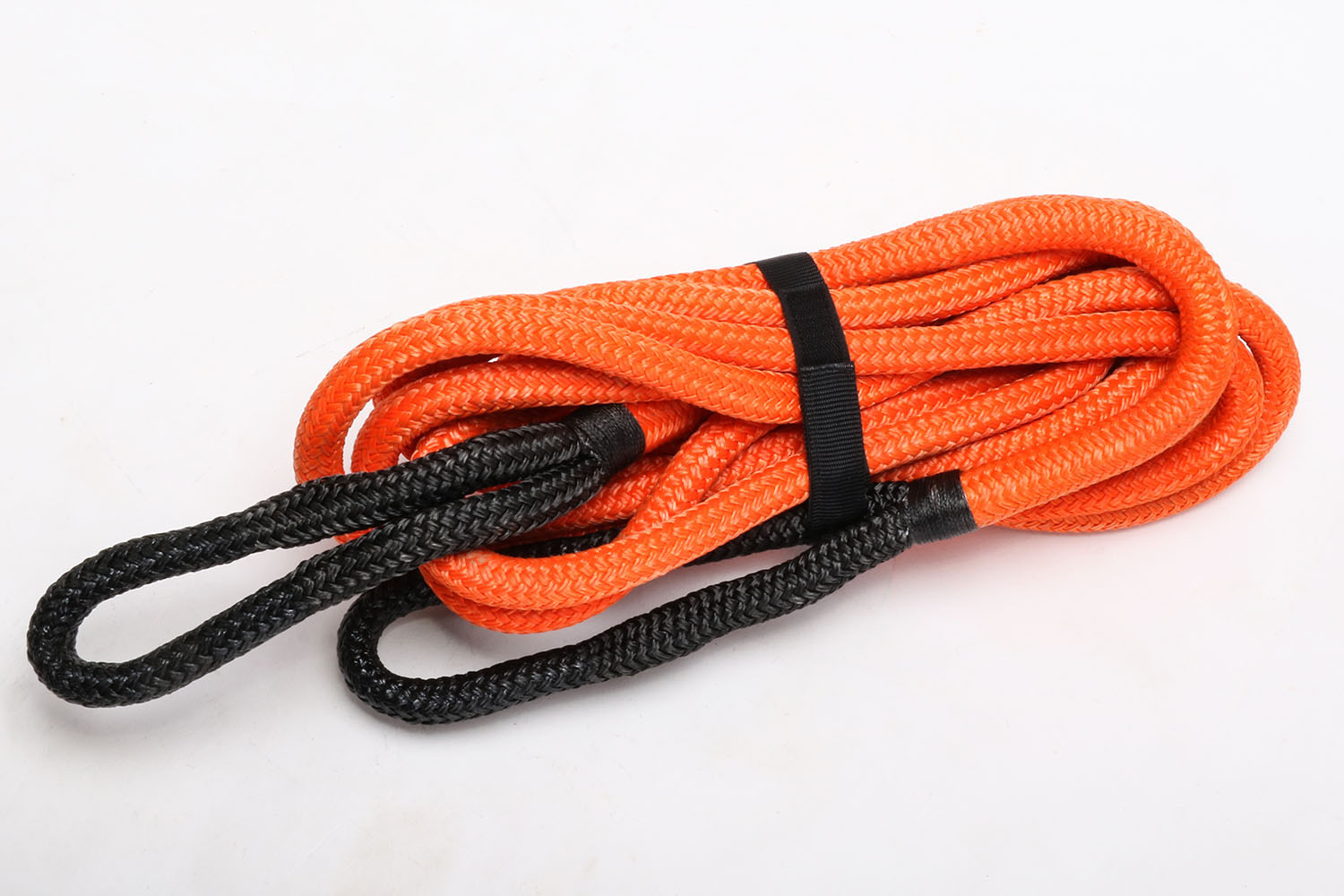
Kinetic recovery rope KERR, 8m long If you are frequently recovering off-road vehicles stuck in mud, dirt or sand, kinetic recovery ropes are the ultimate solution. The decisive advantage these elastic synthetic ropes have over more rigid traditional straps or plastic ropes is their ability to store kinetic energy from the towing vehicle. This stored energy can build in the elastic rope and is then transferred continuously and smoothly to the trapped vehicle. Primarily, there are two positive effects when recovering cars or 4x4s with kinetic ropes. The rope’s elasticity compensates for sudden load peaks when the towing vehicle inadvertently jerks forward or transfers sudden jolts of force to the rope. This in turn means that the breaking strength of the rope won’t be tested as quickly and damages to vehicles or equipment are prevented. The second effect is that lighter vehicles can recover heavier ones, because the kinetic energy transferred from the towing vehicle can build in the rope until the resisting force is neutralized. The rope will stretch by an additional 30 to 35 %. The easiest method on both the rope and the vehicle recovery points is a slow and steady build-up of momentum until the rope snaps back and frees the trapped vehicle. Our rope allows for a safe temperature range from -70 to 99°C, which is highly superior to conventional ropes. Urethane-polymer coating makes our orange KINTO ropes highly water-, UV and abrasion-resistant. From a safety point of view, we would like to mention, though, that workload and breaking strength can be greatly reduced in damaged or overextended ropes. Taking good care of your rope is therefore highly recommended. Length: 8 mDiameter: 24 mmBreaking strength: 13 tMaterial: 100% double weave Nylon / Polyamid 6.6, water-, UV- and abrasion-resistantElongation: 30-35%Temperature: -70°C to + 99°CColor: Orange Length: 8 mDiameter: 19 mmBreaking strength: 8.6 tMaterial: 100% double weave Nylon / Polyamid 6.6, water-, UV- and abrasion-resistantElongation: 30-35%Temperature: -70°C to + 99°CColor: Orange (the rope is available in color olive here) You can find an ideal storage option here.A value bundle with rope and storage bag can be found here.
Prices incl. VAT;

Nakatanenga Outdoor Storage Box Pro – premium protection for genuine off-road adventures Travelling by 4x4, camper or expedition vehicle calls for more than an ordinary plastic crate. The Nakatanenga Outdoor Storage Box Pro is made for demanding use: a rugged off-road storage box designed to protect gear on dusty trails, rough tracks and in challenging weather. Recovery gear, tools, camping kitchen equipment and travel essentials stay protected and easy to organise. IP67 waterproof and dustproof – ready for demanding terrain The rotomoulded shell is made of high-impact polyethylene with a 3.6 mm wall thickness and is built to cope with knocks, vibration, dirt, dust and hard-going off-road use. It provides IP67 dust and water protection, while UV-8 stabilisers add high resistance to prolonged sunlight. With the box correctly closed, its contents remain protected even during long journeys in persistent rain and heavy downpours. This makes it particularly useful for roof racks and open load beds, where storage boxes are exposed to weather, wind and occasional contact with branches. For the stated water and dust protection, the lid, latches and drain valve must be fully closed. Organised from the inside – modular storage included Rather than being a simple empty cargo chest, the Pro series comes with a modular interior organisation system. An elastic lid net keeps flat essentials close at hand, while removable storage trays offer a separate level for small tools and accessories. The included dividers can be installed or removed as required, helping separate different types of gear and reduce unwanted movement while travelling without sacrificing flexibility for your individual loadout. Pro 50: 1 lid net, 1 removable tray, 2 removable dividers. Pro 90: 1 lid net, 1 removable tray, 2 removable dividers. Pro 110: 1 lid net, 2 removable trays, 5 removable dividers. Easy to secure – integrated strap guides and tie-down points all around Integrated strap guides and tie-down points on every side make it easier to secure the box with appropriate ratchet straps or other suitable tie-down equipment. This is particularly useful on roof racks, in pickup beds and in vehicle storage systems. The boxes are also stackable to help build an organised, space-saving setup. Always secure cargo correctly and observe vehicle and rack load ratings. Drain valve on every size – one feature, several practical uses All three box sizes feature a drain valve that lets you release collected water or melted ice without tipping the entire box over. With ice or cooling packs inside, the box can also function as a passive ice chest or cooler – for drinks, for example, or when transporting fish. The valve also makes cleaning easier after wet or dirty equipment has been carried or something has leaked inside. There is no active refrigeration; the valve must be closed for watertight transport. Padlock-ready and designed for practical use Robust plastic latches hold the lid closed. Suitable padlocks can be fitted at the designated locking points (padlocks not supplied). Side handles make the box easier to carry, and a sturdy metal bottle opener permanently screwed to the body adds a convenient detail at camp. Reflective details – easier to spot after dark Reflective elements on the outside make the box easier to see when light falls on it – at camp, during night-time loading and unloading or when it is placed next to the vehicle. They help make the box outline more visible in low-light conditions. Off-road, overlanding, camping and expedition use As a 4x4 cargo box, waterproof equipment case, camping storage box or vehicle load-space organiser, the Pro range works for recovery gear, spares, tools, kitchen equipment and travel essentials. It can also be carried on roof racks and pickup load beds when secured correctly. Filled with ice or cooling packs, it can also serve as a passive cool box or ice chest – for drinks and food, for example, or for transporting fish. Meltwater can be drained easily through the integrated drain valve. The hard-wearing design is equally at home in garages and workshops. Three sizes – one premium range The Nakatanenga Outdoor Storage Box Pro comes in grey and three sizes: approximately 50, 90 and 110 litres. Every model includes a lid net, removable storage trays and dividers matched to its size. Specification Pro 50 Pro 90 Pro 110 Capacity approx. 50 L approx. 90 L approx. 110 L External dimensions(L × W × H) 59.5 × 46.6× 33.7 cm 83.0 × 46.8× 37.15 cm 120.0 × 46.8× 33.6 cm Internal dimensions(L × W × H) 47.5 × 33.1× 22.65 cm 71.0 × 33.1× 25.5 cm 108.0 × 32.3× 21.6 cm Weight approx. 6.75 kg approx. 10.5 kg approx. 14.0 kg Included internal organisers Lid net 1 1 1 Storage trays 1 1 2 Dividers 2 2 5 Why pay more for a premium off-road storage box? There are certainly cheaper storage boxes available. Many rotomoulded cases even look almost identical at first glance. The meaningful differences are often found in the details: the grade and formulation of the plastic, wall thickness, structural design, reinforcements, latches, hinges, seals, drain valves, tie-down options and interior organisation all contribute to how a box performs when it matters. We have deliberately chosen to offer only high-quality boxes that we have tried ourselves and take on our own off-road trips and expeditions. That decision is backed by more than 30 years of hands-on off-road experience and feedback from customers. When you're far from the nearest town, discovering that a supposedly waterproof box lets rain inside is the last thing you want. Suddenly, the money saved at checkout does not feel like much of a saving. Our philosophy is simple: buy cheap, buy twice. That does not mean every lower-priced box is poor quality. It means we choose not to compete for the lowest price. The Outdoor Storage Box Pro is built for the kind of use our customers actually put their equipment through: roof racks, rough trails, dust, mud, rain and branches. Durability, weather protection and thoughtfully engineered details are more than marketing phrases to us – they're the standard we stand behind. That is why this is a premium storage box. Padlocks, tie-down straps, ice and cooling packs are not included. Cooling is passive only; no active refrigeration.
Prices incl. VAT;

Tool Roll - modular tool bag in a set The principle of Tool Roll is as ingenious as it is old: roll out instead of junk. The square fits into the round, remains always at the intended place and therefore takes less space altogether. Can you still improve that? We say yes. The newly developed, modular Nakatanenga Tool Roll owes its added value to our experience as an off-roader, screwdriver and also as a fan of tactical equipment. The clou are big velcro surfaces on the baseplate. So our tool roll can be equipped arbitrarily and is extremely flexible in use. Depending on the set, up to six tool bags (sizes M and S) can be attached. So you take with you only the tool sets that are really needed. For better clarity, the individual pockets can be color-coded via the zip puller. Fluorescent, writable ID patches help to identify the content, even in the dark. And we also thought about it: Loose bits and pieces find their place in the sewn-in mesh pockets. The Tool Roll rolls up clean even with maximum placement and is quickly closed or opened with two clip closures. Carrying handle and shoulder strap facilitate transport. When deployed, the Toll Roll on the D-rings (two or three depending on size) is hung on the wall, on the vehicle or on the tree in the field. Robust, high-quality nylon is our material of choice to guarantee long life even with hard use. With the choice of different sizes and combinable bags you will find as a mechanic, do-it-yourself, biker or cyclist guaranteed your own, optimal Nakatanenga Tool Roll combination. Material: Bag: 100% nylon Closure: Duraflex Dimensions: Basic size small base: 25x64 cm Basic size small Velcro bag: 23x6x6 cm Basic size large base: 46x64 cm Basic size large Velcro pocket: 44x6x6 cm There is a smaller and a larger version of the tool roll - each with different accessories. Please select the desired variant. Note: Delivery is WITHOUT content!MADE IN EU The tool roll sets at a glance: Tool bag size S - set 1:• 1 x size S base plate• 4 x Velcro pocket size S. Tool bag size S - set 2:• 1 x size S base plate• 4 x Velcro pocket size S.• 1 x attachable work pad size S Tool bag size M - set 1:• 1 x size M base plate• 4 x Velcro pockets, size M Tool bag size M - set 2:• 1 x size M base plate• 4 x Velcro pockets, size M• 1 x attachable work mat size M Tool bag size M - set 3:• 1 x size M base plate• 3 x Velcro pockets, size M• 2 x Velcro pocket size S Tool bag size M - set 4:• 1 x size M base plate• 3 x Velcro pockets, size M• 2 x Velcro pocket size S.• 1 x attachable work mat size M Tool bag size M - set 5:• 1 x size M base plate• 2 x Velcro pockets, size M• 4 x Velcro pocket size S Size M - set 6:• 1 x size M base plate• 2 x Velcro pockets, size M• 4 x Velcro pocket size S• 1 x attachable work mat size M
Prices incl. VAT;

VIAIR EVC88P Every Vehicle Carry™ – Digital 12V Portable Compressor with Pressure Preset The VIAIR EVC88P Every Vehicle Carry™ is the digital evolution of the proven VIAIR 88P. This compact 12V compressor is designed for inflating vehicle tyres up to approximately 33 inches, making it ideal for cars, SUVs, 4x4s and light commercial vehicles. An easy-to-read digital pressure gauge with adjustable target pressure and automatic shut-off makes tyre inflation particularly convenient: simply set the required tyre pressure and start the compressor. Once the preset pressure has been reached, the compressor switches off automatically. Power is supplied directly from the vehicle battery via battery clamps. An integrated LED work light makes operation easier in low-light conditions, while the solid brass screw-on tyre chuck provides a secure connection to the tyre valve. Original VIAIR Part Number (P/N): EVC88PAdditional reference / search term: VIA-EVC88P Features and technical specifications: Operating voltage: 12 V Permanent magnet motor Maximum duty cycle: 25 minutes at 2 bar / 30 PSI Maximum working pressure: 8 bar / 120 PSI Maximum current draw: 20 A Protection rating: IP53 Operating temperature: -20 °C to +70 °C Dimensions: approx. 24.9 × 8.1 × 14.2 cm Net weight: approx. 2.2 kg Power cable length: approx. 3 m Air hose length: approx. 4.8 m Suitable for vehicle tyres up to approx. 33 inches Digital pressure gauge Adjustable target pressure Automatic shut-off when the preset pressure is reached Integrated LED work light Solid brass screw-on tyre chuck Direct battery connection with 25 A fuse Note on Presta valves: A suitable valve adapter is required for use with Presta bicycle valves. A Presta valve adapter is included in the scope of delivery. VIAIR inflation times: 195/70 R14 Inflation time to 1.3 bar 35 sec. (± 5 sec.) 2.0 to 2.7 bar 40 sec. (± 5 sec.) 225/60 R18 Inflation time 1.3 to 2.0 bar 50 sec. (± 5 sec.) 2.0 to 2.7 bar 1 min. 00 sec. (± 5 sec.) 31 × 10.5 inches Inflation time 0 to 2.0 bar 3 min. 50 sec. (± 10 sec.) 1.0 to 2.0 bar 2 min. 05 sec. (± 5 sec.) 33 × 12.5 inches Inflation time 0 to 2.0 bar 5 min. 45 sec. (± 15 sec.) 1.0 to 2.7 bar 2 min. 56 sec. (± 5 sec.) Scope of delivery: 1 × VIAIR EVC88P 12V compressor 1 × air hose with solid brass screw-on tyre chuck 1 × power cable with battery clamps and 25 A fuse 3 × inflation adapters 1 × Presta valve adapter 1 × deluxe carry bag Note on off-road use: Due to its design, the VIAIR EVC88P does not have a connection for an external air filter. It is nevertheless generally suitable for use in dusty or sandy environments, provided that the compressor is positioned in a location that minimises exposure to dust. To reduce the intake of dust and fine particles, the compressor should not be operated or placed directly on the ground under such conditions. An elevated and preferably protected position is recommended, for example inside the vehicle, on the load area or on another surface away from dust and sand. The EVC88P is therefore also a practical solution for typical off-road use in dusty environments. For particularly intensive or continuous operation in extremely dusty conditions, a compressor with an integrated or connectable air filter may be the more suitable alternative. Suitable alternatives from the VIAIR range: VIAIR 400P-A portable 12V compressor with automatic shut-off VIAIR 450P-A portable 12V compressor with automatic shut-off
Prices incl. VAT;

OSRAM LEDriving Cube PX4500 – 4,500 Lumens for Professional Work Lighting Whether carrying out demanding work on a vehicle, at a construction site or during off-road operations, the OSRAM LEDriving Cube PX4500 delivers powerful work lighting with 4,500 lumens for situations where high light output and reliable illumination are essential. These compact LED work lights combine efficient light distribution with robust construction, making them suitable for professional use in demanding conditions. One light output, four beam patterns: The PX4500 is available with four different beam patterns. Ultra Wide provides particularly broad illumination of nearby areas, Wide lights up larger working areas around the vehicle, Flood combines broad illumination with extended range, while Spot concentrates the light for targeted illumination of more distant areas. This allows you to select the most suitable beam pattern for your application, while the light output remains unchanged at 4,500 lumens across all four variants. All four PX1500 variants operate on 12 or 24 volts, have a rated power of 45 watts and produce daylight-like illumination with a colour temperature of 6,000 Kelvin. The IP6K8 and IP6K9K protection ratings ensure excellent resistance to dust and water. The lights also meet the requirements of CISPR 25, Class 5. Direct mounting, flexible mounting and reinforced mounting options are available for different installation requirements using separately available accessories. OSRAM provides a 5-year warranty on these work lights. Please note: Only the work light itself is included in the scope of delivery. The mounting kit and connection cable are sold separately: View compatible accessories. OSRAM Cube PX4500 – Technical Specifications Compared All variants deliver 1,500 lumens. The main differences are their beam patterns, illumination ranges and weights. Ultra Wide Wide Flood Spot Article Number LEDPWL103-UW LEDPWL106-WD LEDPWL109-FL LEDPWL112-SP Beam Width / Beam Pattern Ultra Wide Wide Flood / Long Range Spot / Focused Beam Illumination Range 70 m 60 m 105 m 185 m Weight 702 g 698 g 698 g 699 g Technical Specifications Common to All Four Variants Technology LED Rated Voltage 12 / 24 V Rated Power 45 W Luminous Flux 4,500 lm Colour Temperature 6,000 K Dimensions (L × W × H) 117.1 × 68.4 × 113.4 mm Protection Ratings IP6K8 / IP6K9K EMC CISPR 25, Class 5 OSRAM Warranty 5 Years Other Light Outputs and Accessories: The OSRAM Professional Series PX is also available from us with: 1,500 lumens 2,500 lumens 3,500 lumens Mounting and Connection Accessories Legal Notice: Additional work lights without ECE approval for use as driving lights must not be switched on whilst driving. In Germany, the provisions of the German Road Traffic Licensing Regulations (StVZO), particularly Section 52(7), must be observed. Different regulations may apply in other countries.
Prices incl. VAT;
